El  Panorama Actual del Sector Energético en México: Implicaciones Legales, Económicas y Estratégicas para el Sector Privado

El Panorama Actual del Sector Energético en México: Implicaciones Legales, Económicas y Estratégicas para el Sector Privado

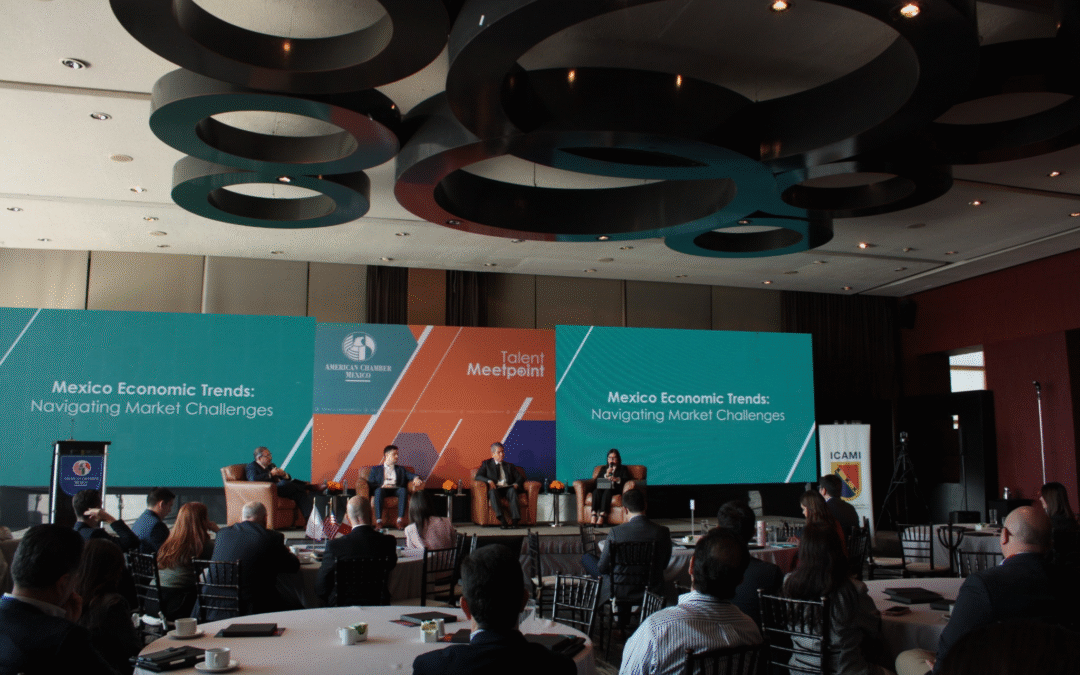
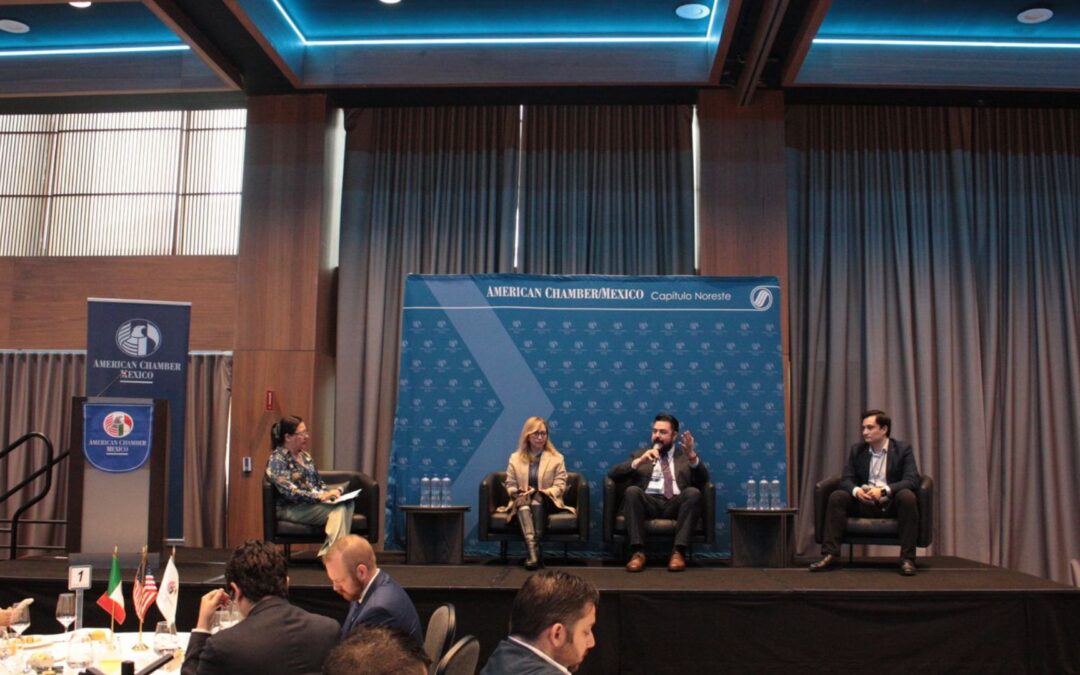
La energía es un componente clave para atraer inversión y fortalecer la competitividad de nuestro país. Por ello, AMCHAM Capítulo Noreste, realizó una mesa de análisis para evaluar la situación actual del sistema energético nacional. Leopoldo Salinas de Acclaim Energy, Carla Amaya del Foro de Energía y Cambio Climático de Nuevo León, Víctor Ramírez de Perceptia 21 Energía, Gabriela de la Paz Meléndez del ITESM y Luis Gutiérrez de la Agencia Estatal de Energías Renovables de Nuevo León, analizaron las implicaciones de la actual matriz energética y los ajustes regulatorios necesarios para responder a la creciente demanda vinculada al fenómeno del nearshoring.

Como destino industrial estratégico en Norteamérica, México enfrenta una creciente demanda energética que representa una oportunidad para modernizar la infraestructura, diversificar fuentes y asegurar un suministro confiable que potencie la competitividad del país. Sin embargo, la dependencia del gas natural expone al país a desafíos como la volatilidad de precios internacionales y factores geopolíticos; estos retos representan una oportunidad para diversificar la matriz energética mediante energías renovables, sistemas de almacenamiento y redes de distribución avanzadas, asegurando la estabilidad del suministro, la continuidad operativa de las empresas y la competitividad del sector industrial.

Desde la perspectiva jurídica, la implementación de la Ley del Sector Eléctrico (LSE 2025) representa un factor clave para brindar certidumbre a inversionistas y empresas, al establecer un marco normativo que permite planificar con visión de largo plazo. Aunque aún falta la reglamentación oficial de muchos perceptos, acelerar la emisión de las disposiciones secundarias es clave para garantizar estabilidad, predictibilidad y un entorno favorable para la inversión, impulsando así  el desarrollo del sector eléctrico.

La relación energética con Estados Unidos representa una oportunidad de complementariedad entre ambas naciones, y el aumento de la inversión en la infraestructura eléctrica de México es clave para fortalecer la capacidad nacional, garantizar un suministro estable, mantener la asequibilidad de la energía y generar confianza en el sistema eléctrico. Complementar esta infraestructura con la adopción de tecnologías avanzadas de medición, control de redes, almacenamiento y gestión de fuentes renovables incrementa la eficiencia y confiabilidad del sistema, asegurando que México pueda atender la creciente demanda energética. Este contexto ofrece a las empresas la oportunidad de tomar decisiones estratégicas más sólidas, fortaleciendo su planeación y capacidad de adaptación para garantizar continuidad operativa frente a cualquier vulnerabilidad del sistema.

Para las empresas, la coyuntura actual requiere transformar los desafíos en oportunidades. La planeación energética debe considerar escenarios de diversificación de fuentes de abasto e integración de tecnologías limpias que reduzcan la exposición a la volatilidad externa. La digitalización de procesos, la modernización de sistemas de control y la eficiencia operativa son herramientas clave para optimizar costos y fortalecer la capacidad de adaptación. Además, el cumplimiento regulatorio demanda reforzar la trazabilidad del consumo energético, mantener documentación exhaustiva de las operaciones y anticipar ajustes normativos relacionados con la LSE 2025. La coordinación con asociaciones empresariales, como AMCHAM, y la formación de alianzas estratégicas contribuyen a mitigar riesgos y consolidar ventajas competitivas sostenibles.

México enfrenta un momento decisivo para su política energética. La articulación de políticas estratégicas, la diversificación de fuentes, la modernización de infraestructura y la apertura a nuevos actores, acompañadas de estabilidad regulatoria, permitirán consolidar un sistema energético competitivo y sostenible. Para el sector empresarial, el valor reside en convertir la incertidumbre en fortaleza, adoptando una estrategia integral que combine innovación tecnológica, cumplimiento normativo y colaboración institucional, asegurando la continuidad de sus operaciones en un entorno energético global cada vez más exigente.

AMERICAN CHAMBER/MEXICO
Monterrey, Nuevo León | 06 | 10 | 2025

Navigating U.S. Tariffs on Mexico: Legal and Economic Implications for Businesses

Navigating U.S. Tariffs on Mexico: Legal and Economic Implications for Businesses

Within the framework of the USMCA, the session “The Legal and Economic Implications of U.S. Tariffs on Mexico Under WTO Rules” was held, organized by the Committee on Legality and the Rule of Law, Northwest Chapter. The session featured Nick Baker, Managing Director and Co-Head of Trade and Customs at Kroll, and Luis Martínez, partner at Martínez-Sernada Abogados, who provided a comprehensive analysis of the legal and economic effects of U.S. tariffs on Mexico and their implications for the private sector.

U.S. tariffs implemented under the International Emergency Economic Powers Act (IEEPA) have reached levels not seen since 1934, with rates up to 50% affecting strategic sectors such as steel, aluminum, copper, and the automotive industry. While these measures present challenges, they also offer an opportunity for companies to strengthen operational resilience. Proactive strategies such as verifying the origin of materials, diversifying suppliers, and preparing for customs audits have become key tools to navigate the current environment. Additionally, reviewing contract clauses, securing critical inventories, and anticipating logistics adjustments can help companies mitigate short-term impacts while positioning themselves for long-term stability and growth.

From a legal perspective, the application of the IEEPA presents challenges that intersect with the United States’ obligations under the World Trade Organization (WTO). The ongoing judicial review regarding the constitutionality of these measures could redefine the scope of presidential authority in trade matters, potentially shaping the rules governing Mexican exports. This context offers companies an opportunity to strengthen their preparedness by considering international legal scenarios, closely monitoring litigation outcomes, and proactively documenting operations. Coordinating with business associations and preparing thorough compliance reports can help safeguard key exports and support a stable, predictable trading environment.

Defending the rule of law requires balancing compliance with multilateral commitments to ensure predictability while respecting the sovereignty of states, recognizing their right to adopt legitimate public policy measures in strategic areas such as security, health, and critical industries. For companies, this means anticipating regulatory changes, supporting operations with robust documentation, and engaging specialized legal and technical expertise to minimize risk. Additionally, integrating legal and economic analyses into sector specific strategic planning is essential to understand how judicial decisions and tariffs may impact costs, supply chains, and competitiveness.

U.S. tariffs create a complex environment, but they also present opportunities for Mexican companies to strengthen their competitiveness. WTO mechanisms, regional coordination, and technical preparedness are tools not only for governments but also for the private sector. For companies, the key value lies in turning uncertainty into resilience, enhancing supply chain traceability, exploring alternative sourcing options, and maintaining a robust compliance strategy. Proactive management of regulatory and judicial developments, coupled with respect for the sovereign frameworks of each country, not only mitigates risk but also creates a competitive advantage in an increasingly demanding international market.

AMERICAN CHAMBER/MEXICO
Monterrey, Nuevo León | 26 | 09 | 2025

Tariffs, Trade, and USMCA Review: Legal and Commercial Insights

Tariffs, Trade, and USMCA Review: Legal and Commercial Insights

The United States-Mexico-Canada Agreement (USMCA) has established a new phase for the trade relationship between the United States, Mexico, and Canada. During the Northeast Trade Spotting session organized by the Northeast Chapter of the Foreign Trade & Logistics Committee, Managing Director and Co-Leader of Trade & Customs at Kroll, Nick Baker, presented a detailed analysis of U.S. tariff policy and its implications for business operations within the region.

The U.S. tariff environment has reached levels not seen since 1934. Current measures include tariffs on copper, steel, aluminum, and the automotive industry, with rates reaching up to 50% on raw materials and derivatives. These measures are grounded in the International Emergency Economic Powers Act (IEEPA), which is undergoing judicial review. The outcome of these legal proceedings may redefine the scope of presidential authority in trade matters, establishing new parameters that companies will need to integrate into their strategic planning.

In response to measures adopted by the U.S. administration, Mexico and Canada have implemented differentiated strategies. In Mexico’s case, while the possibility of applying tariffs of up to 25% on strategic sectors was announced, the Federal Government chose to prioritize diplomatic channels. Canada, meanwhile, responded immediately with 25% retaliatory tariffs on U.S. products. However, beginning in September, the Canadian Government decided to reduce most of these measures with the objective of facilitating continued bilateral dialogue. These measures, along with modifications to the de minimis threshold for cross-border operations, have generated new customs requirements that affect transit times for goods in the region.

Beyond the political context, these measures have direct implications for business operations. The new tariffs increase the cost of inputs such as metals and automotive components, while changes in customs procedures require additional processing times and greater compliance preparation. In this environment, companies are strengthening origin verification and tariff classification processes, diversifying suppliers, and adjusting budgets to incorporate commercial risk management considerations.

Tariffs implemented under legal frameworks such as the IEEPA introduce new variables in the commercial environment that call for greater adaptability in business planning. While ongoing adjustments to their duration and evolving legal procedures require careful consideration in financing and long-term commitments, they also encourage companies to enhance flexibility and strengthen compliance and logistics strategies. At the regional level, these measures present an opportunity to reconfigure supply chains in ways that reinforce resilience and competitiveness, helping to preserve the USMCA’s role as a platform for growth and innovation across key sectors such as metals, automotive, and agri-food.

While the current measures remain in place, at AMCHAM, we reaffirm our commitment to building bridges of constructive dialogue and contributing with our multisectoral expertise and concrete proposals that support decision-making to strengthen the competitiveness of our region. By working together, the United States, Mexico, and Canada can ensure that North America continues to be a global platform for competitiveness, innovation, and shared prosperity.

AMERICAN CHAMBER/MEXICO
Monterrey, Nuevo León | 01| 09 | 2025

Perspectivas Regionales sobre la Reducción de la Jornada Laboral en Latinoamérica

Perspectivas Regionales sobre la Reducción de la Jornada Laboral en Latinoamérica

La discusión sobre la jornada laboral y los derechos de los colaboradores ha cobrado fuerza en América Latina, donde distintos países han impulsado reformas para mejorar la calidad de vida de los trabajadores, al mismo tiempo que se busca preservar la eficiencia operativa de las empresas. En México, este debate ocurre en un contexto caracterizado por la creciente integración en cadenas globales de valor, la presión competitiva en el sector industrial y la necesidad de mantener la productividad frente a los mercados internacionales.

En una mesa de análisis organizada por AMERICAN CHAMBER/MEXICO Capítulo Noreste, junto con AmCham Chile y AmCham Colombia, especialistas como Iván Mergudich de Aramark; Fernando Arab, abogado laboral y exviceministro del Trabajo en Chile; Carolina Porras de Philippi Prietocarrizosa Ferrero DU & Uría; Francisco Peña, de CCN; Edith González de Banco Base; y Álvaro García, de Prodensa, compartieron sus perspectivas sobre la implementación de estas reformas en sus respectivos países, resaltando experiencias que pueden servir como referencia para México.

La experiencia chilena muestra que la reducción de la jornada laboral se ha implementado en un entorno económico estable y con regulaciones consolidadas, lo que ha permitido ajustes ordenados sin afectar la productividad. En Colombia, el proceso avanza de manera más gradual, acompañado de medidas de apoyo que equilibran la eficiencia empresarial con el bienestar de los colaboradores, atendiendo la diversidad de sectores productivos.

Para México, estos casos subrayan la importancia de evaluar cualquier reforma con una visión integral que considere la competitividad industrial, la carga administrativa y los impactos en empresas con operaciones multinacionales. El intercambio de experiencias regionales brinda un marco de referencia útil para orientar políticas laborales y estrategias de gestión de talento en distintos contextos.

Más allá de las diferencias entre países, el análisis permitió identificar buenas prácticas, generar aprendizajes compartidos y construir una visión comparativa que enriquece la toma de decisiones. Estos insumos fortalecen a las empresas de la región para avanzar hacia un modelo laboral que impulse la productividad, fomente el bienestar de los colaboradores y promueva un desarrollo económico más inclusivo y sostenible.


AMERICAN CHAMBER/MEXICO
Monterrey, Nuevo León | (19 | 08 | 2025)