
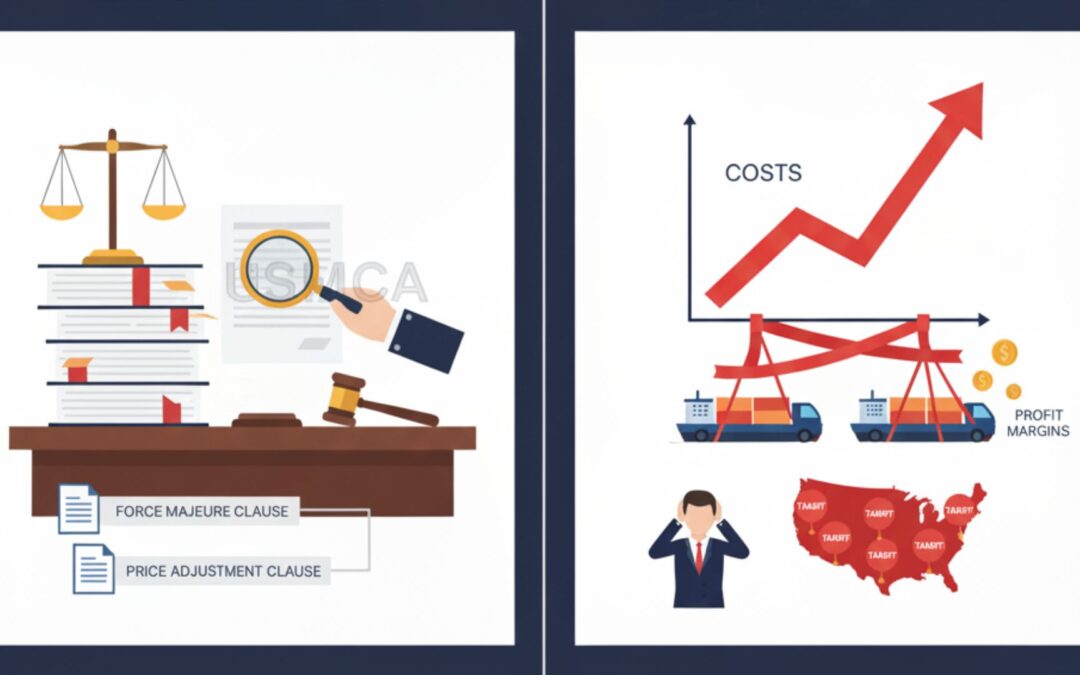
Within the framework of the USMCA, the session “The Legal and Economic Implications of U.S. Tariffs on Mexico Under WTO Rules” was held, organized by the Committee on Legality and the Rule of Law, Northwest Chapter. The session featured Nick Baker, Managing Director and Co-Head of Trade and Customs at Kroll, and Luis Martínez, partner at Martínez-Sernada Abogados, who provided a comprehensive analysis of the legal and economic effects of U.S. tariffs on Mexico and their implications for the private sector.
U.S. tariffs implemented under the International Emergency Economic Powers Act (IEEPA) have reached levels not seen since 1934, with rates up to 50% affecting strategic sectors such as steel, aluminum, copper, and the automotive industry. While these measures present challenges, they also offer an opportunity for companies to strengthen operational resilience. Proactive strategies such as verifying the origin of materials, diversifying suppliers, and preparing for customs audits have become key tools to navigate the current environment. Additionally, reviewing contract clauses, securing critical inventories, and anticipating logistics adjustments can help companies mitigate short-term impacts while positioning themselves for long-term stability and growth.
From a legal perspective, the application of the IEEPA presents challenges that intersect with the United States’ obligations under the World Trade Organization (WTO). The ongoing judicial review regarding the constitutionality of these measures could redefine the scope of presidential authority in trade matters, potentially shaping the rules governing Mexican exports. This context offers companies an opportunity to strengthen their preparedness by considering international legal scenarios, closely monitoring litigation outcomes, and proactively documenting operations. Coordinating with business associations and preparing thorough compliance reports can help safeguard key exports and support a stable, predictable trading environment.
Defending the rule of law requires balancing compliance with multilateral commitments to ensure predictability while respecting the sovereignty of states, recognizing their right to adopt legitimate public policy measures in strategic areas such as security, health, and critical industries. For companies, this means anticipating regulatory changes, supporting operations with robust documentation, and engaging specialized legal and technical expertise to minimize risk. Additionally, integrating legal and economic analyses into sector specific strategic planning is essential to understand how judicial decisions and tariffs may impact costs, supply chains, and competitiveness.
U.S. tariffs create a complex environment, but they also present opportunities for Mexican companies to strengthen their competitiveness. WTO mechanisms, regional coordination, and technical preparedness are tools not only for governments but also for the private sector. For companies, the key value lies in turning uncertainty into resilience, enhancing supply chain traceability, exploring alternative sourcing options, and maintaining a robust compliance strategy. Proactive management of regulatory and judicial developments, coupled with respect for the sovereign frameworks of each country, not only mitigates risk but also creates a competitive advantage in an increasingly demanding international market.
AMERICAN CHAMBER/MEXICO
Monterrey, Nuevo León | 26 | 09 | 2025