The trade relationship between Mexico and the United States has undergone a profound evolution over the past decade, driven by increasingly sophisticated supply chains, stronger regulatory alignment under USMCA, and a growing need to maintain operational integrity in a highly competitive global environment. Today, North America operates as a deeply interconnected economic region where cross-border flows depend on technical coordination, regulatory transparency, and agile customs processes designed for modern trade.
Within this context, recent U.S. tariff adjustments under Section 232, affecting sectors such as steel, aluminum, and other sensitive goods, have introduced new obligations for economic operators. While these measures do not alter the structural foundations of USMCA, they do heighten the level of documentation rigor required to substantiate origin and uphold preferential treatment, placing greater emphasis on accuracy, consistency, and traceability across supply chains.
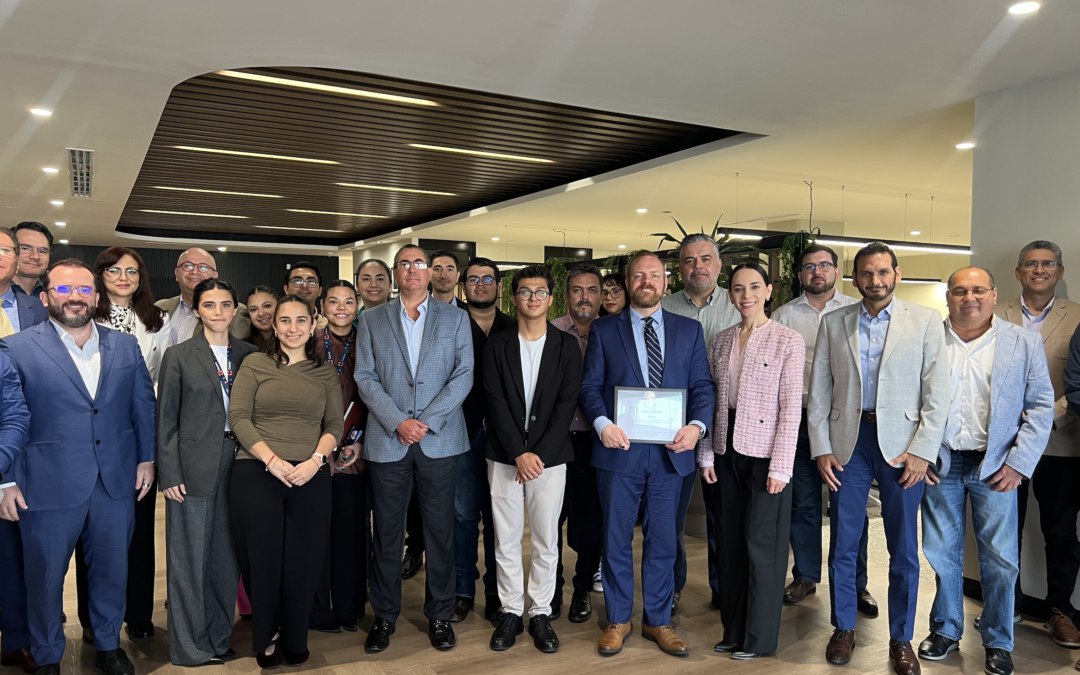
To provide strategic clarity for the business community, the Foreign Trade & Logistics Committee of the AMERICAN CHAMBER OF COMMERCE OF MEXICO, Northeast Chapter, hosted a working session with the United States Customs and Border Protection (CBP) to discuss the operational implications of these changes.
During the session, Adam Sulewski, CBP Trade Representative for Mexico, led a detailed review of the current operational environment. CBP emphasized the importance of maintaining precise customs processes, comprehensive traceability throughout the production chain, and complete alignment between commercial documentation and declared information. This guidance helped clarify how tariff adjustments apply to specific industries, while confirming that USMCA benefits remain fully available for goods that strictly comply with the agreement’s rule of origin, an essential point for sectors dependent on reliable cross-border flows of intermediate inputs.
The discussion also highlighted the operational realities facing companies in Mexico, particularly those embedded in trilateral value chains that require consistency and coordination across multiple jurisdictions. As compliance expectations evolve, maintaining robust records, verifiable documentation, and proactive internal controls becomes increasingly essential. In a high-precision environment, even seemingly minor discrepancies can trigger extended reviews, cargo delays, or downstream adjustments. Viewed strategically, compliance is not a hurdle, but a key enabler of operational continuity. Anticipating potential issues before they materialize helps companies maintain flow, minimize friction, and enhance the resilience of their business models.
CBP emphasized the United States Government’s continued commitment to ongoing technical dialogue, transparency, and collaborative problem-solving with the private sector. This approach reinforces institutional capabilities on both sides of the border, providing companies with the clarity needed to navigate a dynamic regulatory landscape while supporting the continued fluidity of legitimate trade.
Within this context, companies are encouraged to adopt a strategic approach centered on anticipation, alignment, and disciplined execution. Priority actions include:
- Strengthening traceability systems to ensure information on inputs and origin
- Conducting regular documentation reviews across invoices, origin certificates, and production records
- Maintaining continuous, expectation-aligned communication with suppliers and logistics partners
- Updating internal procedures as CBP guidance evolves
Participation in training initiatives, internal audits, and compliance-readiness programs further supports a culture of prevention rather than correction, enabling organizations to respond with confidence to any verification scenario.
The Key takeaway: although the regulatory environment continues to evolve, it also presents valuable opportunities to strengthen internal systems, enhance compliance standards, and reinforce competitive positioning within the North American supply chain. At a time when precision, cooperation, and transparency define success, companies that adopt a proactive and well-coordinated approach will be best positioned to safeguard continuity, mitigate risks, and navigate an environment that, while demanding, also presents clear avenues for sustained growth, adaptability, and continuity.
AMERICAN CHAMBER/MEXICO
Monterrey, Nuevo León | 01 | 12 | 2025